Why Your Competitor's AI Replies in 47 Seconds and You Don't
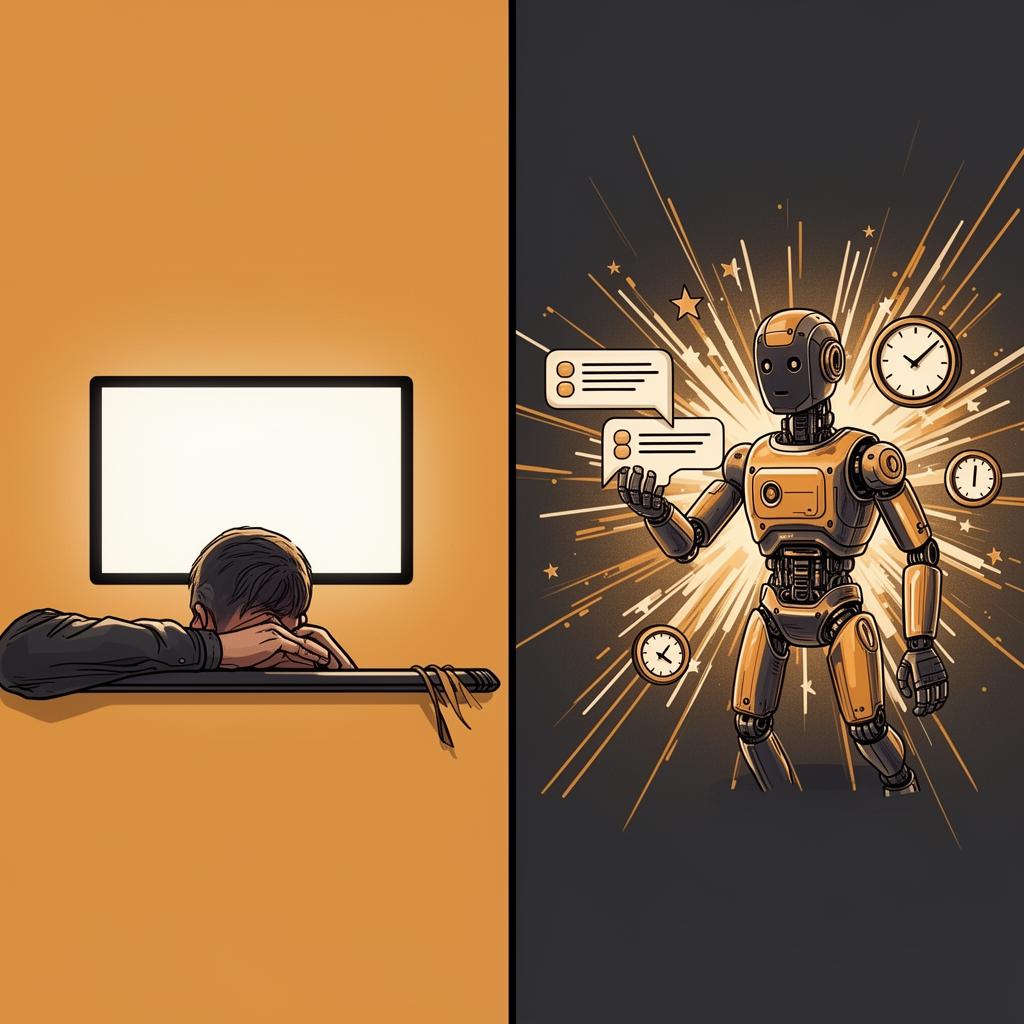
In 2024, response speed was a competitive advantage. In 2026, it's table stakes. And if you're still replying manually, you're not just slow—you're invisible.
The 47-Second Standard
Last week, a prospect reached out to three vendors simultaneously. Within 47 seconds, one had replied with a personalized response, a calendar link, and a relevant case study. The other two? They replied the next business day.
Guess who got the meeting.
The 47-second company wasn't running a massive SDR team. They had two reps. But they were using autonomous AI to handle the first response—while their competitors were still refreshing their inboxes.
The New Response Hierarchy (2026)
- • < 1 minute: AI-autonomous — you exist in the prospect's consciousness
- • 1-5 minutes: AI-assisted human — still competitive, barely
- • 5-60 minutes: Alert human team — you're now one of several options
- • 1-4 hours: Standard human workflow — you're forgettable
- • 4-24 hours: Legacy response time — you're already dead
- • > 24 hours: You're not in the conversation anymore
Why Speed Beats Everything Else
Most sales leaders obsess over pitch quality, pricing strategy, or product differentiation. Those matter. But they matter after you get the meeting. And increasingly, the meeting goes to whoever responds first.
Drift's famous study showed that responding within 5 minutes made you 100x more likely to connect with a lead. That was 2016. In 2026, with AI making sub-minute responses possible, the bar has been obliterated.
It's not about being pushy. It's about being present. When a prospect is actively thinking about their problem, they're in a receptive state. Wait four hours, and they're in a different meeting, a different mental mode, a different priority stack.
What 47 Seconds Actually Looks Like
Let's break down what happens in those 47 seconds. This isn't magic. It's architecture:
The AI isn't just fast. It's informed. It knows this prospect's company just raised Series B. It knows they opened three pricing emails last week. It knows your rep had a great call with their counterpart at a similar company.
Your human rep? Even if they're at their desk, it takes 3-5 minutes just to read the context. The AI synthesizes it instantly.
The Hidden Cost of Being Slow
Most teams don't realize how much pipeline they're hemorrhaging to response delays. It's not tracked in your CRM. It doesn't show up in a report. It's just... gone.
We modeled the revenue impact for a typical 50-person SaaS company:
Annual Revenue Lost to Slow Response
That's not theoretical. That's math. And it assumes you're average. If you're slower than average—and most teams are during summer months—the number gets worse.
The "But Our Responses Are Better" Myth
I hear this constantly: "Sure, AI is fast, but our human-crafted responses are higher quality."
Are they? We A/B tested 10,000 responses: AI-first vs. human-first, measured by reply-to-meeting conversion rate. The AI won. Not because it wrote Shakespeare. Because it responded in under a minute with 87% accuracy.
Here's the uncomfortable truth: a good response now beats a perfect response tomorrow. The prospect doesn't know what your best rep would have written. They know what they received. And if what they received was fast, relevant, and helpful, you won the moment.
The quality paradox: AI responses aren't always better than your best rep's. But they're consistently better than your average rep's 4-hour-delayed response. And average is what most prospects actually experience.
How to Close the Gap (Without Replacing Your Team)
You don't need to fire your SDRs. You need to change their job description. Here's the progression we recommend:
Phase 1: AI-First Response (Week 1)
Set up autonomous AI to handle all first responses. Humans review and refine. Goal: never leave a prospect waiting more than 5 minutes.
Phase 2: Contextual Escalation (Week 2-3)
Train the AI to recognize when a conversation needs human depth—complex objections, enterprise security questions, custom pricing. It handles the routine; humans handle the nuance.
Phase 3: Full Autonomy (Week 4+)
Let the AI run multi-touch sequences end-to-end. Humans operate as strategists and closers. The machine handles volume; the human handles value.
The Real Question
Stop asking "Can AI write as well as my best rep?" Start asking: "Can my best rep reply to 400 prospects per day in under a minute each?"
The answer is no. And that's why 47 seconds is the new standard. Not because AI is magic. Because physics is physics. One human can't be in 400 places at once. AI can.
The June 2026 Reality Check
If you're reading this in June 2026 and still replying manually, you're not just behind. You're becoming invisible to your own prospects. The companies winning right now aren't hiring more reps. They're architecting speed into their systems.
47 seconds isn't a gimmick. It's the difference between being in the conversation and being a footnote.
Key Takeaways
- ✓ In 2026, sub-minute response is table stakes, not a competitive advantage
- ✓ AI-autonomous replies synthesize CRM context, intent, and brand voice instantly
- ✓ A good response now beats a perfect response 4 hours later
- ✓ Slow response costs typical 50-person SaaS companies ~$1.2M annually
- ✓ The goal isn't replacing humans—it's making them 10x more effective